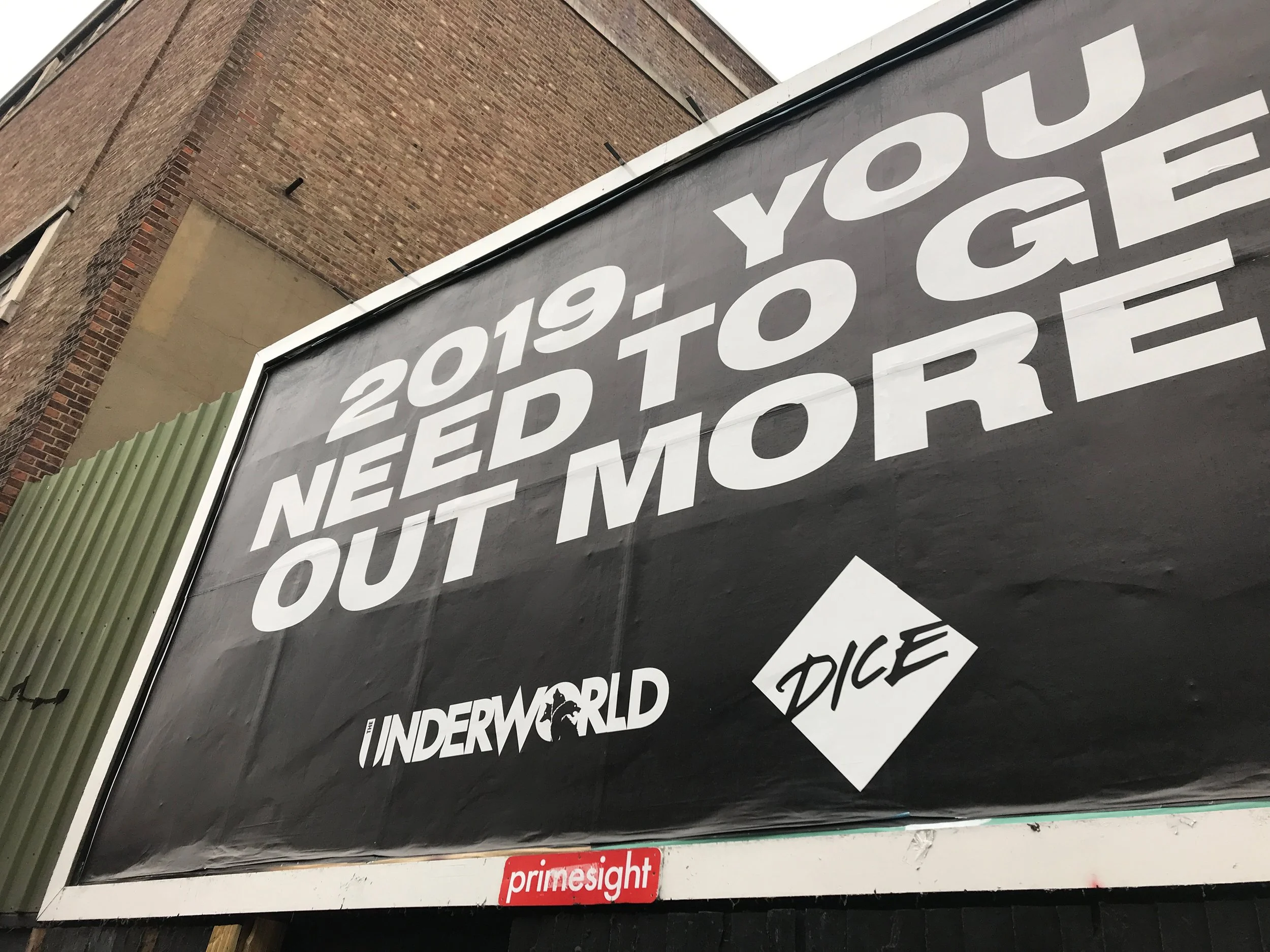
DICE
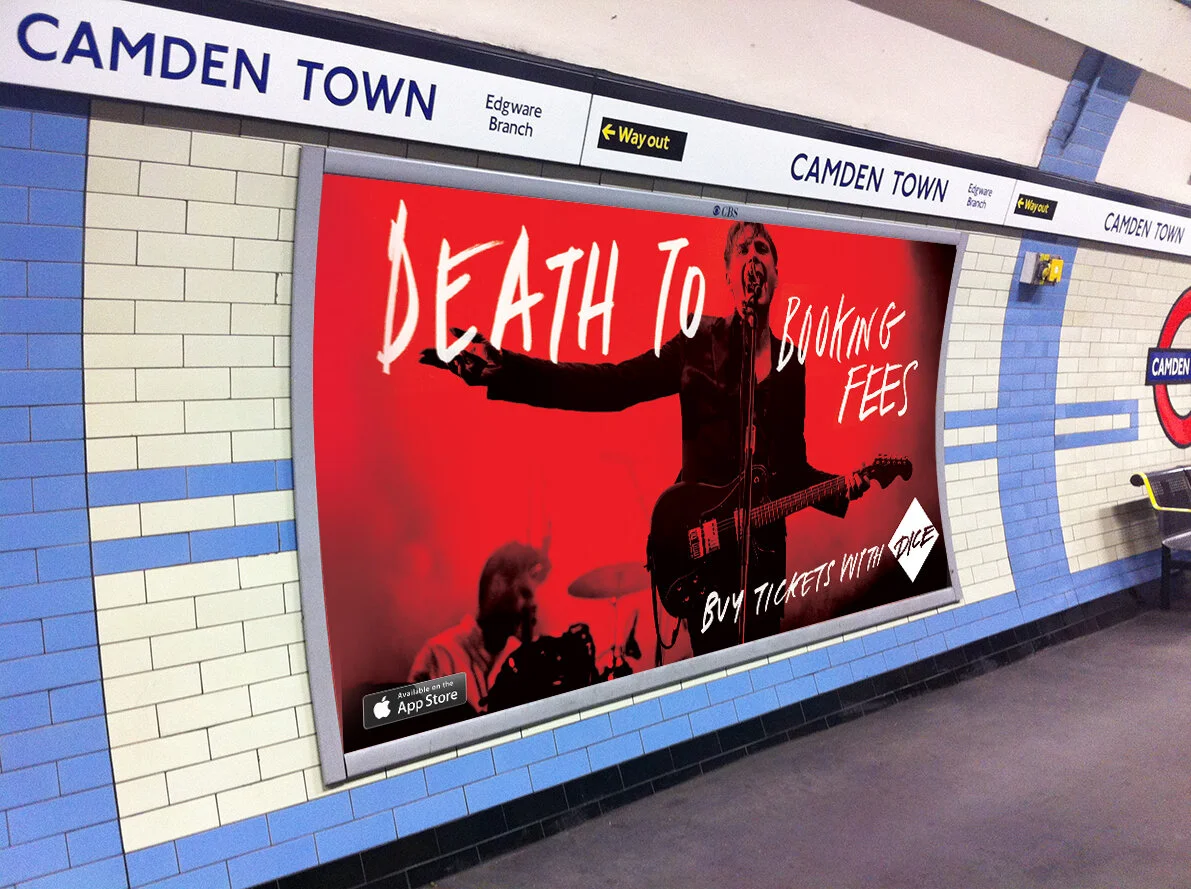
DEATH TO BOOKING FEES
While I was working at ustwo in 2013, three people from the music industry came in to see us about designing and building a ticketing app for them that could change the world. Or at least change the world for live music fans. The idea was simple: offer the best gigs in town, and don’t charge a booking fee. This was a revolutionary thought at the time, and it made me jump off my seat with delight in the very first meeting.
“Death to booking fees!”
Everyone hates the scummy tactic used by the likes of T**********r et al, whereby some mysterious fees get added on to your ticket price at the final hurdle, making an already expensive gig ticket feel like extortion. So the idea to do away with all that was absolutely wonderful to hear – finally, someone cared enough to do something.
“For the fans, by the fans!”
But Phil, Russ, and Andy needed an app – and it needed to look cool, sound cool, and act cool. A product needed to be designed, and a brand needed to be built. Within days we had a bunch of names on the table which all derived from the word ‘ticket’, but I suggested that we move away from this convention, and find something, “different in the realm,” as I like to say. In other words, a juicy moniker which would stand out and make other ticketing apps seem boring.
I put forward half a dozen potential names with solid rationales linking each one to the big idea and our agreed purpose. DICE was chosen almost instantly. I didn’t really have to explain it, but the thinking was based on the notion of exploration and discovery; daring to try something new, and “rolling the dice” to see where your night goes. It was also partially inspired by the controversial cult novel, The Dice Man.
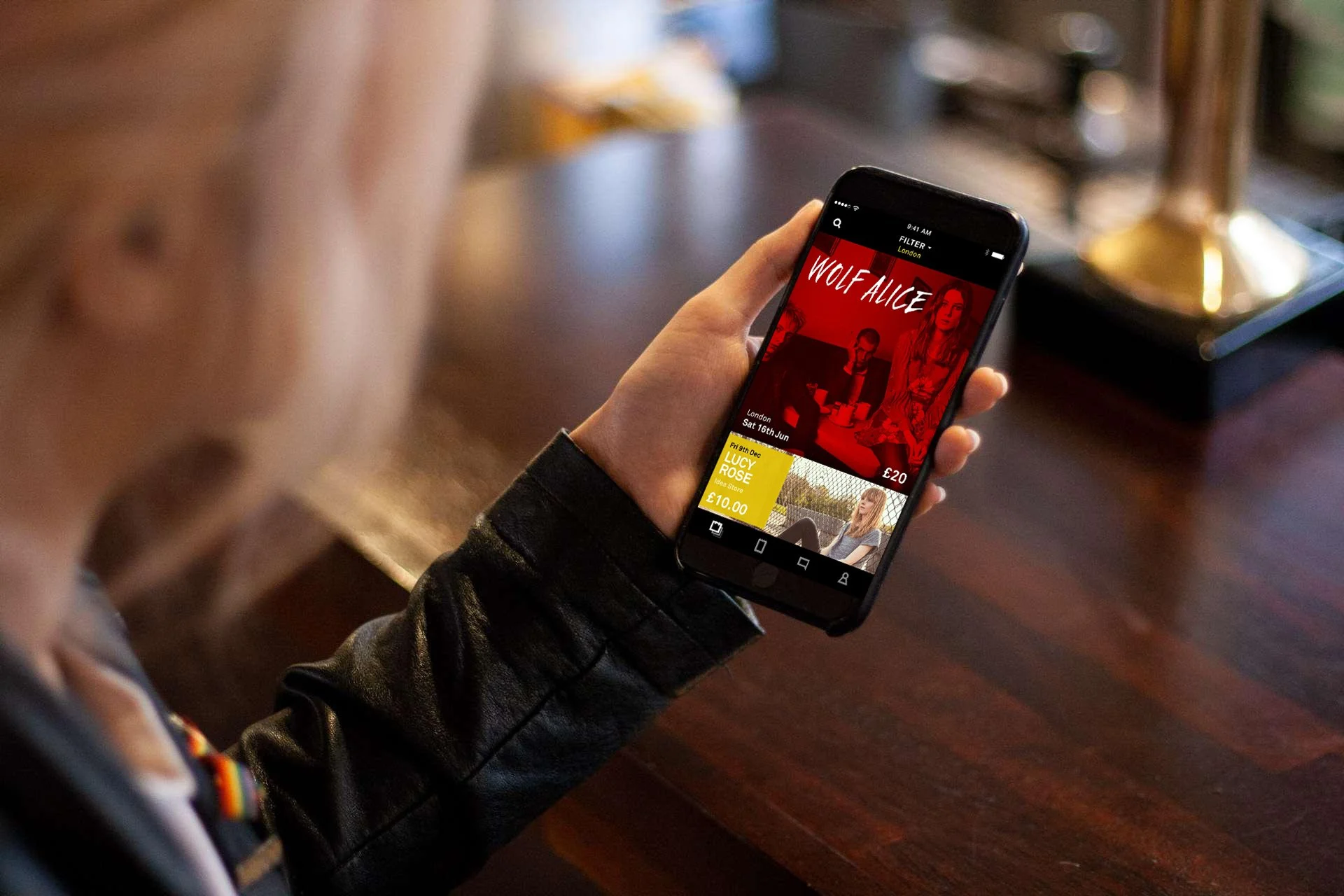
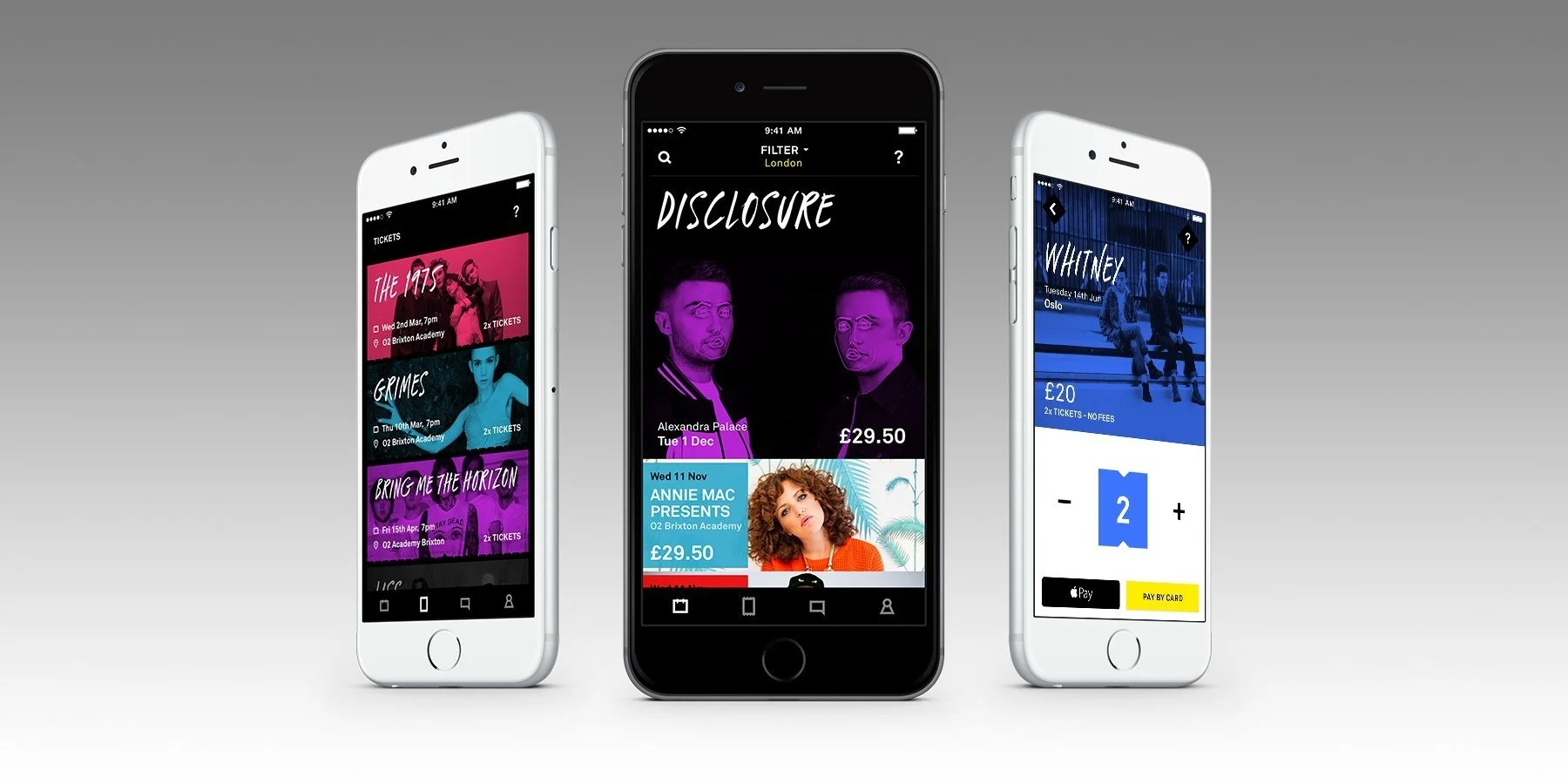
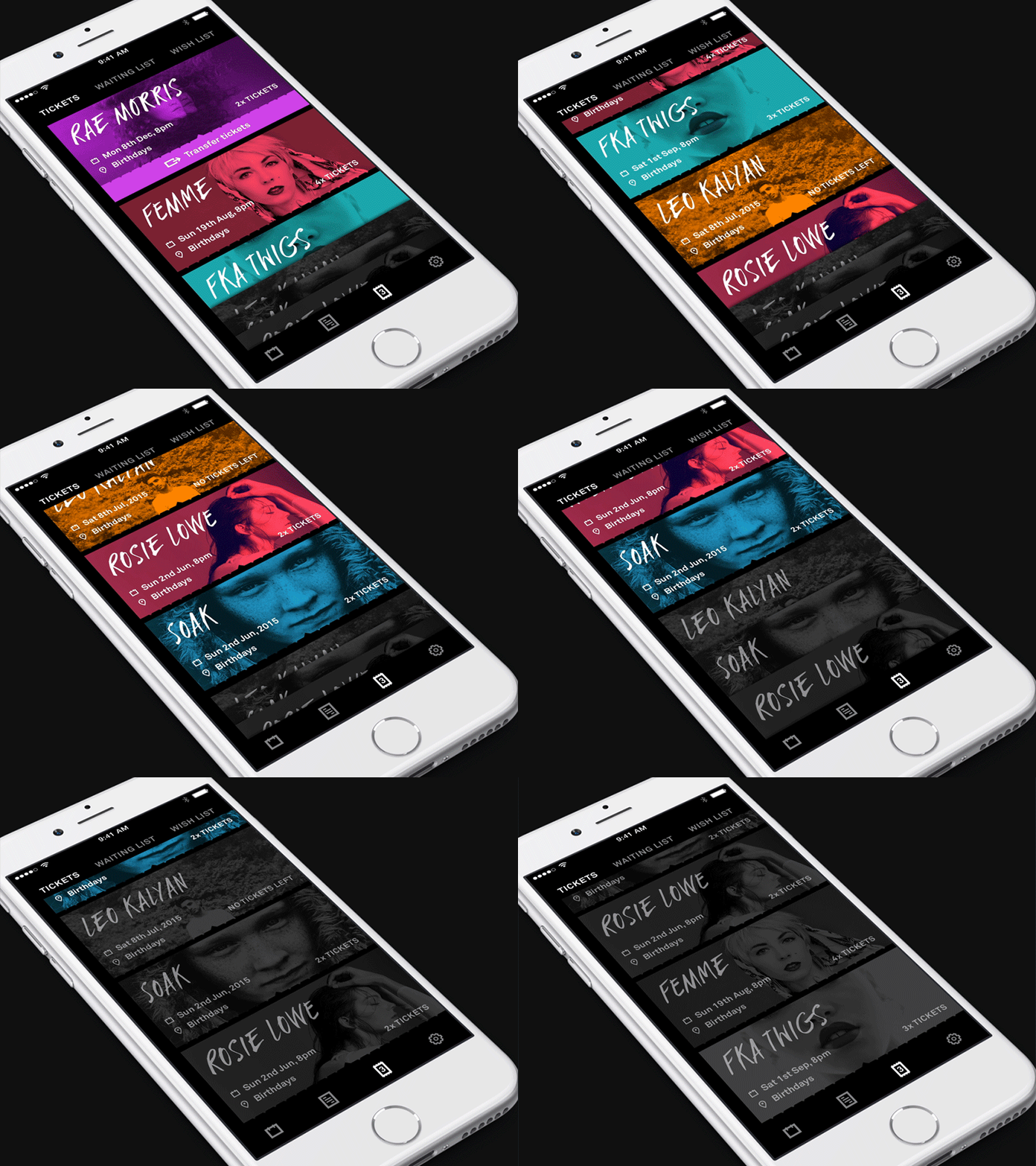
I sketched out a ton of logo ideas, and we quickly settled on a version in my own handwriting, as we all wanted the human touch – this app is made by music fans for music fans, after all. I then began creating mock ups in Photoshop of the potential user interface of the app itself – I had a vision for the look and feel of DICE to be very bold, with vivid colours laid over mono images of the artists, and prices to be presented as clearly as possible.
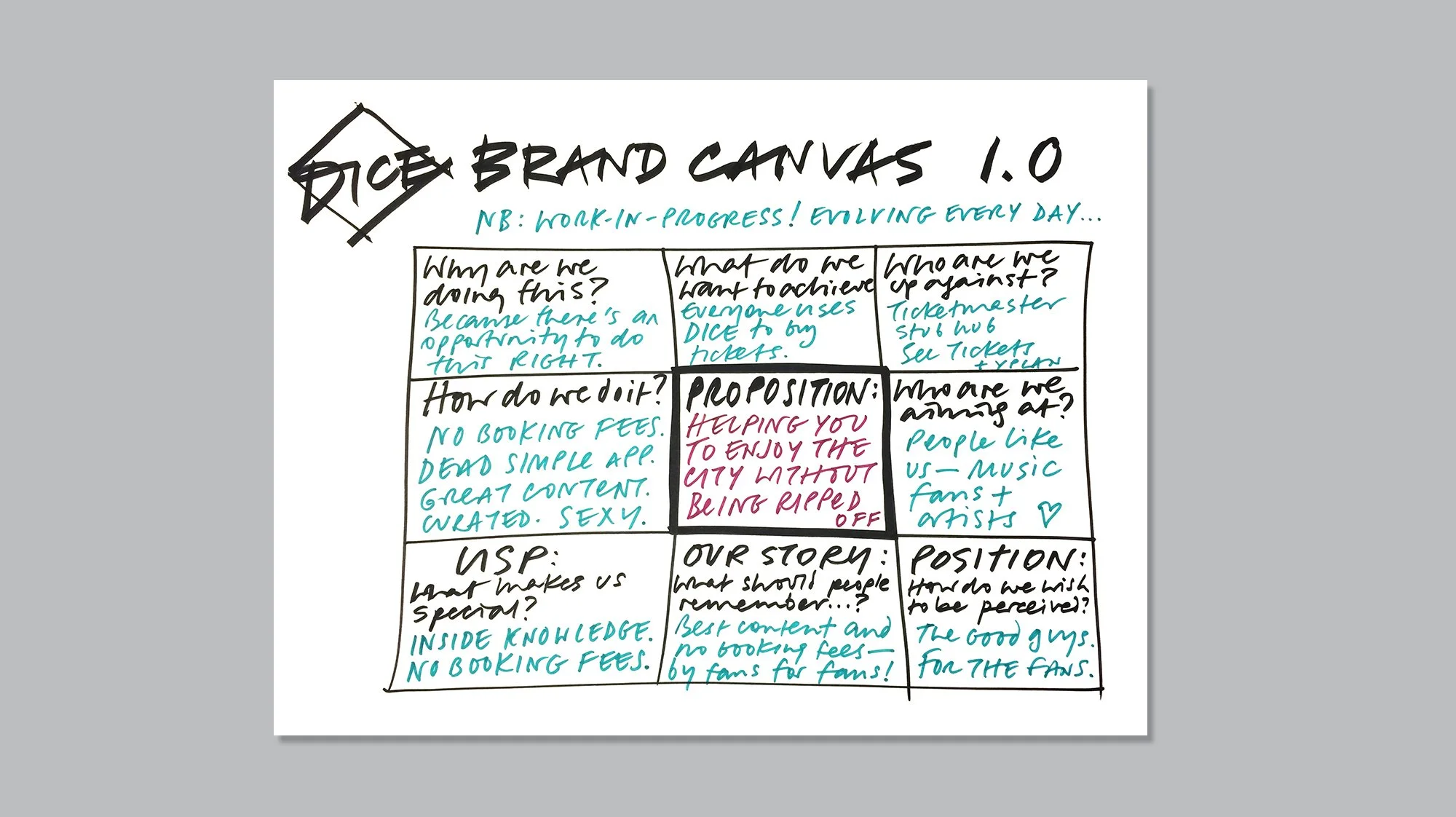
Working with a very small team at ustwo on account of the fact that the founders of DICE had no budget and this was to be a partnership, we quickly got a prototype off the ground with the visual style and tone of voice I was after. Our lead designer, Elg, scanned in my handwriting and created a ‘Travis’ font for all headline text in the app, and our lead engineer made sure that the user experience flowed exactly as I had plotted it out in wireframes on paper. The team grew after the MVP was born, and I focused on building the brand itself, starting with ideas for marketing and promotion. To keep us excited and aligned, I used a special technique I had developed based on the classic ‘brand canvas’ exercise – a grid containing answers to nine carefully crafted questions:
“Why are we doing this? What do we want to achieve? Who are we up against? How do we do it? What are we offering? Who are we aiming at? What makes us special? What should people remember? How do we wish to be perceived?”
This grid went up on the wall at DICE headquarters, and it is still there today, I am told.
With our agreed answers to these killer questions in place, we were able to start working on press releases, marketing campaigns, stunts, promotions, and a whole load of attention-grabbing noise in general. All messaging essentially screaming:“Best gigs. No fees.”
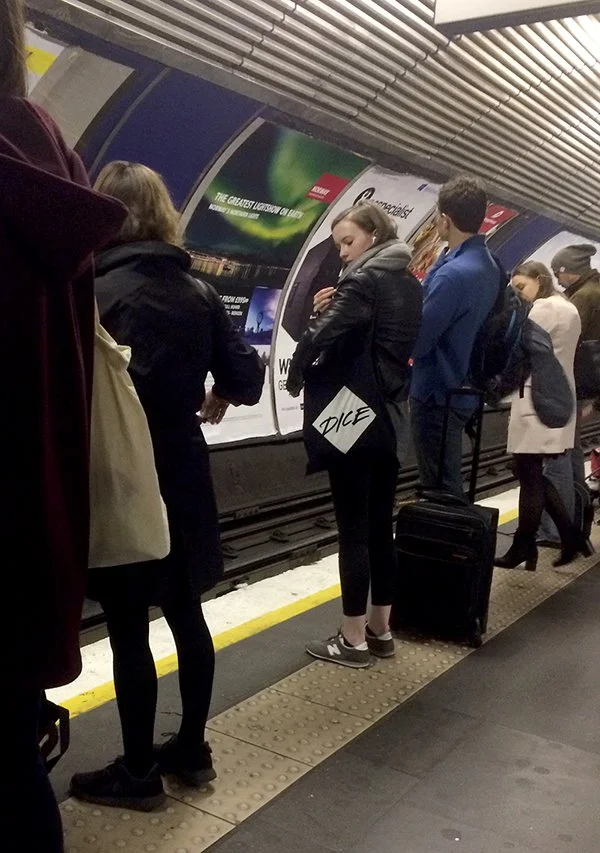
DICE launched in the summer of 2014 and was immediately embraced by music lovers and forward-thinking promoters. It soon became cool to sell tickets through DICE as fans everywhere were enjoying paying the advertised price for a show, instead of some mysteriously inflated price as usual.
The only people who must have hated DICE were, well, you know who.
DICE continues to grow, and remains popular with music fans. The business has raised over $200 million since inception, and even you know who is probably tempted to acquire it, if for no other reason than to stop DICE from making everyone else in the game look greedy.
And we didn’t even run with “Death…” in the end.
Summary of my contribution:
Brand strategy; concept generation; product design; name generation; creative direction; copywriting; art direction; overseeing the user experience and user interface design; creative team management; company presentations; cultural camaraderie; bantz.